Posts

Clover

Image
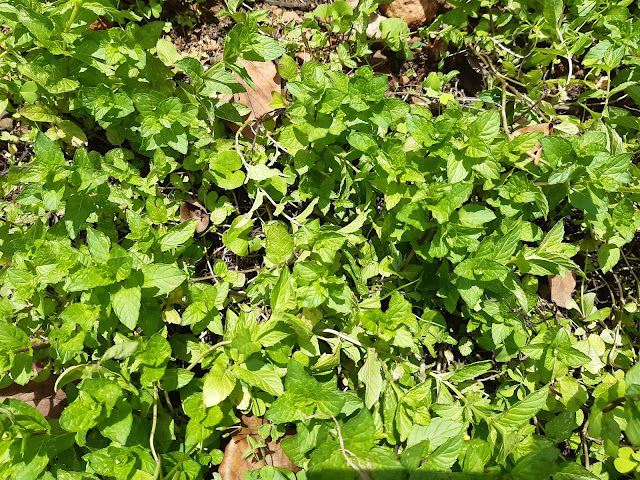
  Everything is wet and muddy after a week of heavy rain. More than 160mm in a few days. Everyone suspects that this is the start of the rainy season. We are not sure, though. Here too, the seasons (normally two wet and two dry seasons a year) are no longer clearly defined. They come later or earlier, they last longer or shorter, are drier or wetter. That causes concern in a country where a lot of people depend on agriculture. But today a cautious sun peeps through the clouds. Time to do some work in the garden. The grass that still looked parched last week is already green again. Incredible how quickly that turns around. In the vegetable garden, I see that the weeds are growing faster than the tomatoes and beans. That needs some tidying up. There is so much clover among the mint that my next mojito might have a different flavour. That mint needs some breathing space. A little later, I am crouching among the mint. Hands full of mud, looking for the clover that has grown all the w...
Buchara, bathing in the past

Image
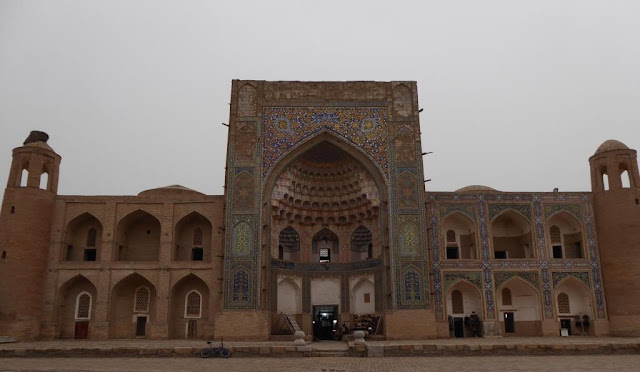
  As the train crosses the steppe, I stare out the window and can imagine the caravans that exchanged valuables and insights between East and West centuries ago. I am on my way to Buchara, an Uzbek city on the Silk Road. An oasis in the middle of the steppe. I am still impressed by the splendour and history of Samarakand, another city here in Uzbekistan. A gem, which Alexander the Great already spoke of with high praise. It is foggy when I arrive in Buchara. The railway station, like the others I have already seen in this country, is a feat of bombastic Soviet architecture. It is still a long way to the city itself. Because when the Russians built the Trans-Caspian railway in 1888, there was so much protest from the local administration that the station was built 10km outside the city. It is misty and grey. Buchara's sand-coloured buildings form some kind of uniform mass, accented by the blue tiles with which the entrance gates of the madrassas and mosques are lined. The histor...

On number plates and emissions

Image
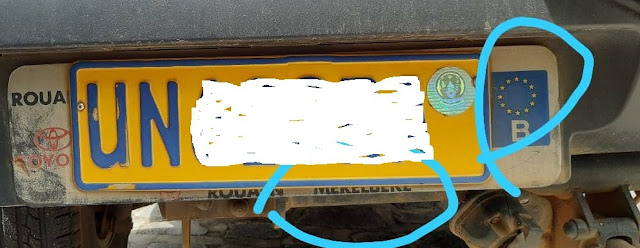
  A UN staff member in Kigali drives a car from Merelbeke, Belgium   It is an old habit when I am on the road: looking at the number plates of the cars in the traffic around me. A Swedish car in Kigali, picture LP As children, during long car journeys, we played games such as collecting as many cars of a certain nationality or collecting as many cars of a certain brand. Whoever picked "Mercedes", "Volkswagen" or "BMW" fastest on the Deutsche autobahn usually won the game. Car watching, in other words. I still do it today. In South Africa, I paid particular attention to the number plates. From those, you could tell which province the car was registered in. Personalised number plates are another interesting phenomenon. What possesses someone to drive around with "Wanted" on the car? Or "Hero"? It led to free associations and musings on the relationship between number plate, car and owner. A Dutch car in Kigali, picture: LP Here i...

Umuganda

Image
  S aturday morning. It is a bit cloudy and cooler than yesterday. Ideal to work in the garden before the sun burns too hard. I hear some birds whistling in the bushes. Nothing else. Not the sound of the heavy traffic on the connecting road across the valley. Not the voice of the woman who passes by in the street, loudly praising her goods which she carries in a basket on her head. No children playing. I hear no snatches of the gliding exercises with which the choir of a church a little lower on this hill warms up the voices. No drums or percussion either. It is silent. It is the last Saturday of the month. It is umuganda. Umuganda refers to community work that contributes to the development of Rwanda. Every last Saturday of the month, economic life falls silent from 7:00 to 11:00. During this time, everyone has to work in their community: cleaning, helping to build a school, constructing terraces, fighting erosion, you name it. The system has existed since the last century, ...

Fast road

Image
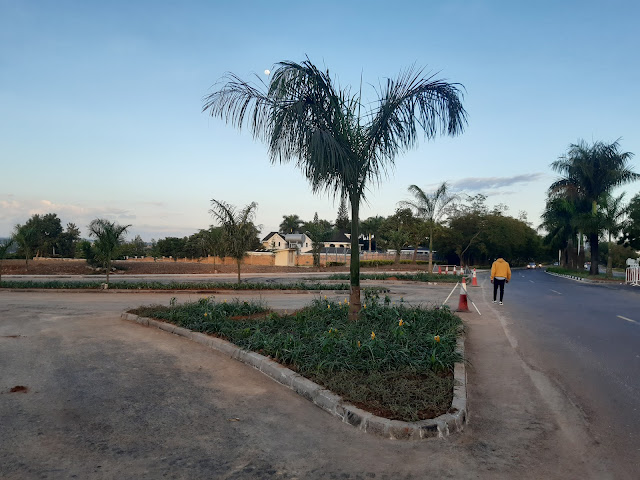
At the end of June, the Commonwealth Summit (CHOGM) took place in Kigali. More than 30 Heads of State met in Kigali. The Prince of Wales, Charles and Camilla, were also here as representatives of Queen Elizabeth. A great logistical challenge for a small country like Rwanda. And it all went well. No incidents. In the run-up to the summit, Kigali paid a lot of attention to improving its infrastructure. Suddenly, bus shelters appeared everywhere. Many roads were given a facelift, holes in footpaths were repaired and shoddy construction sites disappeared behind metres and metres of canvas advertising Rwanda's tourist assets. Perhaps the biggest challenge was getting the many roads -earmarked to ensure efficient flow of traffic during the summit- ready in time. Some roads were built, others were doubled in width. The latter also happened to a connecting road between the hill where I live and the next one. I never knew that road to be busy, but it is the fastest connection between th...

Masks off

Image
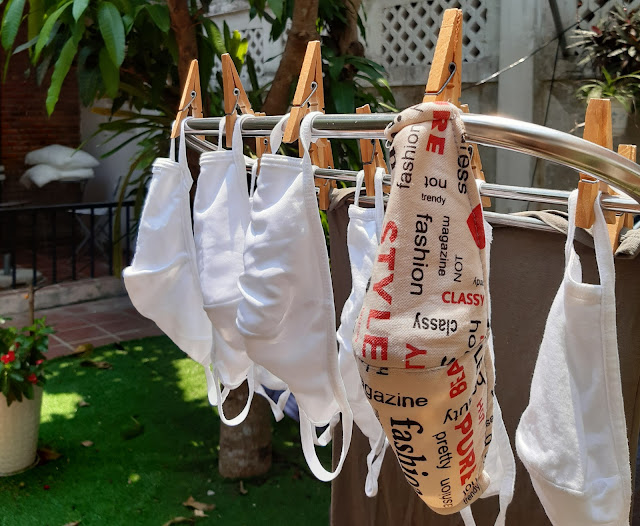
  Today is 'Face Day'. In the cabinet decision of Friday 13 May, there was an important paragraph: face masks are no longer compulsory. Unlike many other countries, in Rwanda we still had to wear face masks both outside and inside. Until Friday the 13th of May, that is. They are still recommended inside though, but it is not compulsory anymore.  For the first time since I moved here, which is over a year now, I can see the faces of the people who I pass on the street. Like today, on the way to the swimming pool. The face of the woman who walks down the street and loudly praises her fruit and vegetables in a basket on her head. For the first time, that voice has a face. The smile of the children playing with a homemade ball on the corner. The dogged expression of the man cycling a colourfully dressed woman to her destination. She is not very thin and the road goes uphill. The face of the pump attendant who tries to calculate how much change I should get. The faces of the beauti...

Cycling

Image
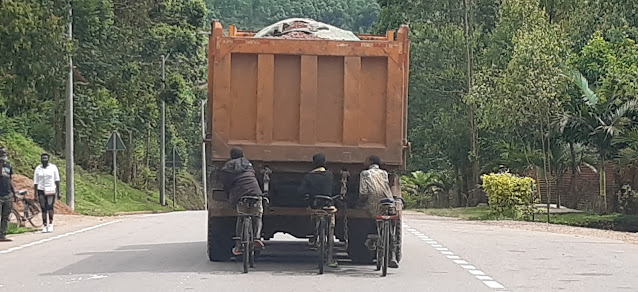
It was a small message on twitter . Rein Taaramäe, an Estonian rider with Intermarché, was on altitude training in Rwanda. He prepared himself here for the Tour of Italy. As part of that, he changed bikes. He tried out a local bike. In the video you can see how he sprints with the other cyclist, who uses Rein's bike for the occasion. Rein soon gives up, he loses with flying colours. If you pause the film, you can take a closer look at the borrowed bicycle. Yes, it has gears. But it also has an extra construction. A sort of extended carrier has been created with a cushion on it. Indeed, it is a bicycle taxi. The driver can take two or even three people on the back. In a country full of hills, this is heavy work, very heavy work. Cyclist Rein, also without passengers, losses from the taxi rider. Who has the best legs here? The film puts the concept of top-class sport into perspective. The taxi bike in the film has gears, but most bicycles used here for transporting people and g...